 Biblical Studies
Isaiah 9: The Mighty God Debate
A discussion on the Isaiah 9 'Mighty God' debate: textual evidence, Dead Sea Scrolls, Septuagint, and implications for Christology in a deep scholarly analysis.
Isaiah 9:2-7 is one of the most famous Christmas passages in the Bible. "For to us a child is born, to us a son is given; and the government shall be upon his shoulder. And his name shall be called: Wonderful Counselor, Mighty God, Everlasting Father, Prince of Peace." Handel's Messiah made it famous. Christmas sermons quote it constantly.
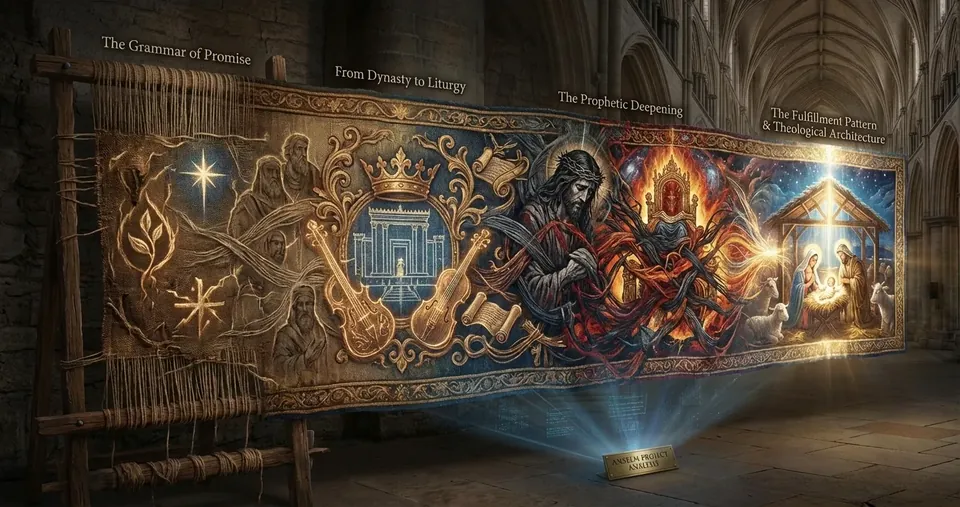
But the scholarly debates around this text are intense. I generated a comprehensive analysis through the Anselm Project to dig into what's actually going on here, and the result was over 70 pages of academic detail on this single passage.
The Central Question Nobody Talks About
The big issue isn't whether this passage is messianic. Christians have always read it that way. The question is simpler and harder: What did Isaiah actually write, and what did those words mean?
The Hebrew text uses "el gibbor" for one of the titles. Standard translations render this "Mighty God." That's a divine title. But the Hebrew can also mean "mighty warrior" or "heroic one."
If you're thinking "Wait, that's a massive difference," you're right. One reading says Isaiah explicitly called the coming child God. The other says he called him a divinely empowered human ruler. That distinction matters for Christology, Jewish-Christian dialogue, and how we understand prophecy.
What the Manuscripts Tell Us
The Dead Sea Scrolls include the Great Isaiah Scroll (1QIsa), dated to around 125 BC. It's one of the oldest biblical manuscripts we have, and it confirms the Masoretic Text's reading of Isaiah 9 almost exactly. The consonants for "el gibbor" are there. The Hebrew for what we translate "Everlasting Father" is there. The structure matches.
This matters because it pushes the textual evidence back centuries before Christ. Whatever Isaiah 9 meant, it wasn't invented by later Christians. The text existed and was stable by the second century BC at the latest.
The Septuagint (the Greek Old Testament translation from the 2nd-3rd century BC) renders these titles in ways that clearly imply divine attributes. Ancient Jewish translators, working before Christian interpretation became an issue, chose Greek words that conveyed divine power and eternal fatherhood.
You can check the Anselm Project Bible to see how different traditions have handled these translations. The APB attempts a fresh translation directly from the Hebrew and Greek, and even there, the divine language is unmistakable.
The Jewish Reading vs. The Christian Reading
Here's where it gets interesting. Medieval Jewish commentators like Rashi and Ibn Ezra tended to read this passage as referring to a human king, often identifying the child with Hezekiah or some other Davidic ruler. They understood the exalted titles as royal epithets, not claims of divinity.
This makes sense within their framework. Judaism rejects the idea that the Messiah is God incarnate. So when they see "el gibbor," they read it as "God is mighty" (a description of God's power on behalf of the king) or as "mighty one" (a heroic title for the king).
Early Christians read it differently. They saw Isaiah predicting the incarnation: God Himself would come as a child, bearing these divine titles because He actually is God. The passage wasn't hyperbole or poetic exaggeration. It was literal prophecy about the nature of the Messiah.
Both readings are dealing with the same Hebrew text. Both are sophisticated. The difference isn't intelligence or scholarship. It's theological framework.
The Davidic Covenant Context
The scholarly report emphasizes something crucial: Isaiah 9 only makes sense against the backdrop of 2 Samuel 7, where God promises David an eternal throne. That's the theological foundation.
When Isaiah says "of the increase of his government and of peace there will be no end, upon the throne of David and over his kingdom," he's invoking that covenant. The question is how that gets fulfilled.
Christians argue it requires a ruler who transcends normal human limitations. "No end" means eternal. "Everlasting Father" implies continuity across generations that only a divine figure could provide. The justice and righteousness promised require divine character to maintain forever.
Jewish interpreters can read this as messianic hope for a future human king under God's blessing, or as fulfilled in the Davidic line's continuation, or as eschatological future hope. The theological elasticity of the language allows for these readings.
The Historical Setting Nobody Disputes
One thing both Jewish and Christian scholars agree on: Isaiah was writing in the 8th century BC during a time of massive political crisis. Assyria was expanding. Northern Israel was under threat. Judah was anxious.
The passage references "the day of Midian" (a callback to Gideon's miraculous victory in Judges 7). It talks about breaking yokes and burning military equipment. This is deliverance language for people living under oppression.
Isaiah promises that God will act decisively, that a child/son will be given who will establish justice and peace, and that this will fulfill the Davidic covenant promise. Whether you read this as immediate hope (a contemporary king) or ultimate hope (a future Messiah) or both (typology where immediate fulfillment points to ultimate fulfillment), the historical situation shaped the message.
Why This Matters for Preaching
I've preached this passage at Christmas. Most pastors have. And here's the tension: you want to preach the incarnation and divinity of Christ, but you also want to be honest about what the text originally meant and how it was understood.
The Hebrew text can support a high Christological reading. "El gibbor" with those consonants, in that context, with the eternal throne language, creates space for Christians to read divine identity into the coming child. We're not inventing meanings that aren't textually possible.
But we should also acknowledge that ancient Jewish interpreters didn't read it that way and had valid linguistic reasons for their reading. The text's ambiguity is real. That doesn't weaken the Christian reading; it just means we're making interpretive decisions based on fuller revelation (the New Testament) that Jewish interpreters don't accept.
Multiple Perspectives on Complex Text
What made the analysis useful was looking at this passage from multiple angles: textual criticism, historical context, linguistic analysis, theological interpretation, and reception history. When you cross-check different scholarly disciplines, you get a more honest picture of what's actually debated and what's settled.
For a passage as theologically loaded as Isaiah 9, that kind of multi-perspective analysis is essential. Too often, commentary either oversimplifies to support a predetermined conclusion or gets lost in academic hedging that doesn't help actual ministry.
The Honest Reality
Isaiah 9:2-7 is a magnificent text. The poetry is stunning. The theological weight is immense. But it's also genuinely complex, and anyone who tells you there's only one way to read it is either ignorant or dishonest.
The Christian reading—that this predicts the incarnation and divinity of Christ—is defensible. The manuscript evidence supports it. The language allows for it. The New Testament applies it. But we should be clear that we're reading through the lens of Christ's fulfillment, not simply extracting an obvious meaning from the Hebrew.
That's not a weakness. That's how prophecy works. The fuller meaning becomes clear in light of fulfillment. But the humility to acknowledge interpretive decisions and textual tensions actually strengthens our apologetics rather than weakening it.
God bless, everyone.